Four Micro-Systems That Keep Daily Life Moving
One observation that keeps coming up around simple homes: friction wins. Small annoyances—where to drop keys, which towel to use, what to do with a stack of papers—accumulate into minutes of frustration several times a day. Designing tiny, reliable systems for those moments reduces that friction. Below are four micro-systems you can set up in an hour or less. Each section ties a practical principle to a short example you can try tonight.
1. The Entry Landing: A One-Decision Pause
Principle: make the first thing you see the only place to decide. An entry landing should invite one simple action so arriving and leaving are decision-free.
What to include
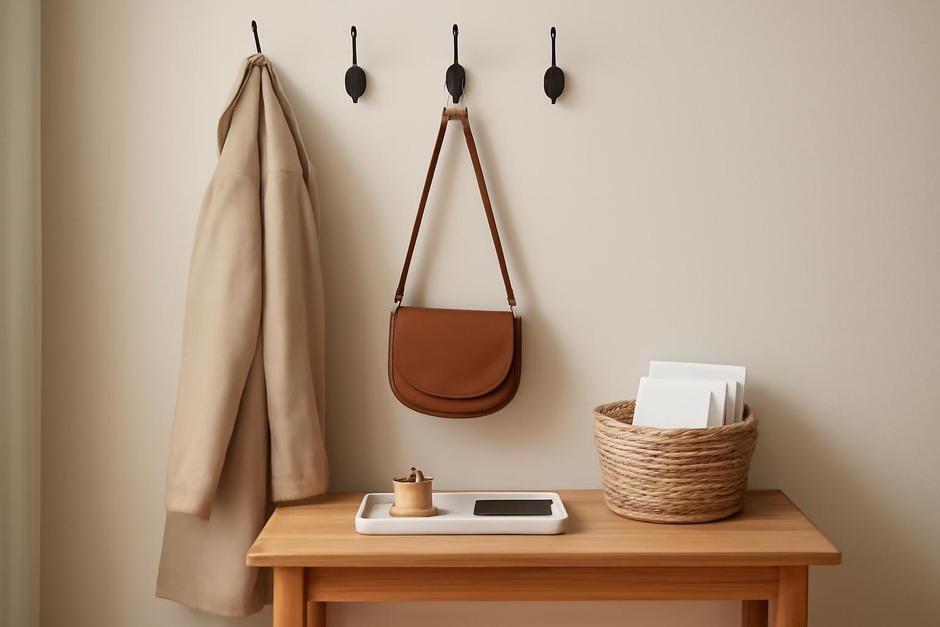
- Surface: a small table or shelf for pockets, mail, and a quick set-down.
- Container: a shallow tray or bowl for everyday items—keys, loose change, a pen.
- Corral: a hook or peg for the bag or coat you use today.
Small example
If you tend to empty pockets on a kitchen counter, move a single tray to the entry and label it mentally as your drop zone for a week. The narrow instruction—”drop here”—stops items from scattering and trains the hand. At the end of the week, take two minutes to empty the tray into a long-term home: keys to key bowl, receipts to a receipt file, and loose coins to a jar.
2. Kitchen Service Station: Reduce the ‘Where’s the…’ Gap
Principle: place tools where they will be used most. A tiny service station near your main prep area reduces back-and-forth steps.
What to include
- Cleaning kit: a small caddy with dish soap, sponge, and a tea towel.
- Frequently used utensils: a narrow jar for the three utensils you reach for daily.
- One-routine waste: a tiny compost bowl or a designated wrapper stash.
Small example
If you find yourself walking across the kitchen for a towel when cooking, place a cloth near the main prep spot for two weeks. Pair that with the caddy under the sink or on the counter. Notice how saving a few steps keeps counters tidier and cleanup quicker.
3. The Laundry Loop: A Daily Nudge, Not a Marathon
Principle: small, frequent actions beat occasional large efforts. Break laundry tasks into short, predictable steps to avoid pile build-up.
What to include
- One-basket rule: a single, visible basket for the next load instead of multiple hidden bins.
- Evening transfer: move clothes to the machine at a set time—after dinner or before bed.
- Folding pause: fold three garments as soon as a load finishes; use a timer for five minutes if needed.
Small example
Try an evening transfer for a week: set a reminder for 8:30 p.m. to move clothes to the washer. It becomes a nudge rather than a weekend project. Folding a few items immediately keeps drawers from overflowing and makes the next morning smoother.
4. Paper and Digital Triage: A Two-Box Habit
Principle: limit choices to two. When mail or messages arrive, decide between two outcomes—action or archive—and handle them quickly.
What to include
- Action box: a small tray or inbox for papers requiring a short task (reply, sign, pay) to be done within two days.
- Archive box: a folder or scanning spot for items that need keeping but no action.
- Digital equivalent: an email folder named “Action” and one named “Archive.” Use a one-minute rule for triage—if it takes under a minute, do it; if not, put it in Action.
Small example
Set a ten-minute Sunday slot to process the Action box. For each paper, either do the task, add it to a calendar, or move it to Archive. For emails, use the one-minute rule to delete, reply, or move. This two-box approach reduces the pile that grows out of indecision.
Conclusion
Micro-systems work because they reduce decision points. Each of the four systems above follows the same pattern: define a single purpose, provide a limited set of tools, and practice one small action repeatedly. Try one system for two weeks before adding another. The goal isn’t perfection; it’s to shave a few frictions out of daily life so the small moments between tasks feel steadier and more manageable.